

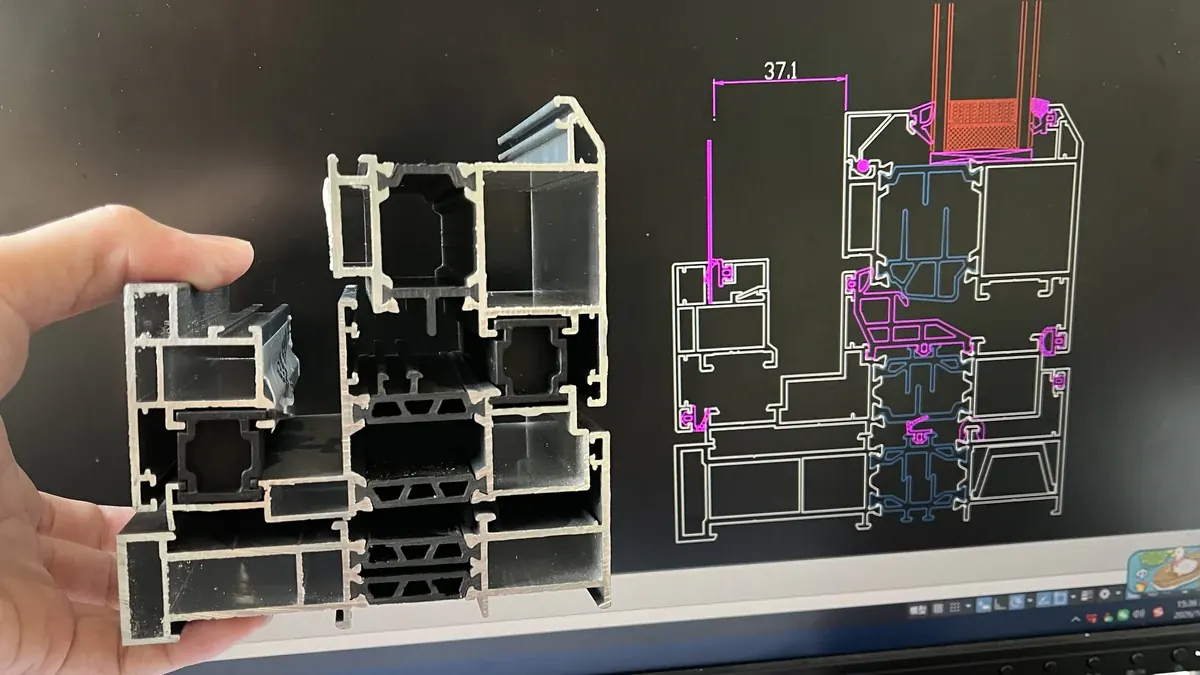
Start with the complete application
Send a dimensioned section drawing, application, expected quantity, alloy and temper, cut length and finish. DWG or DXF files support section review; STEP or IGES models help explain subsequent machining. A sample or dimensioned sketch can also start the discussion when CAD files are unavailable.
Identify visible surfaces, critical dimensions and the parts that must fit the profile. Window and door projects may need actual rollers, corner cleats and EPDM gaskets. Industrial sections may require sliders, bearings or fasteners. Reviewing these items before tooling helps avoid a profile that measures correctly but does not assemble properly.
Approve the drawing and tooling route
The engineering review considers wall thickness, cavities, unsupported features, finish buildup and machining datums. Proposed changes are discussed before approval. The production drawing records its revision, tolerances, visible faces and whether dimensions apply before or after finishing.
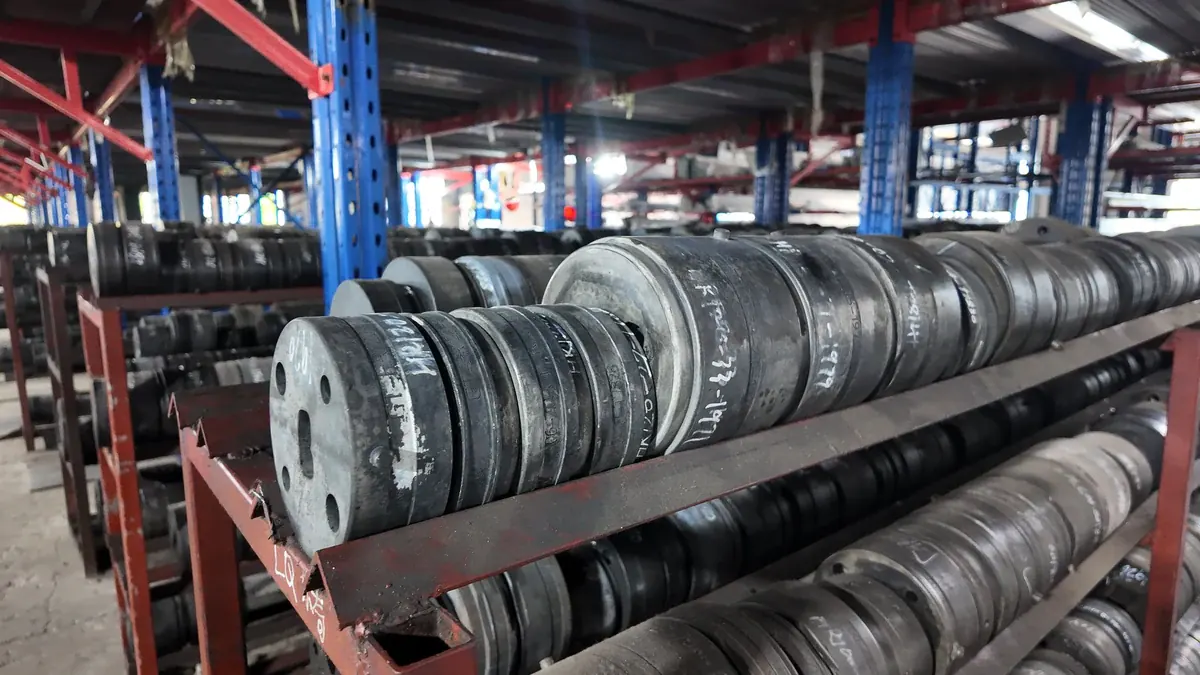
Specialist partners manufacture the dies, supported by Guantian's engineering review, extrusion trials and adjustments. Tool steel, die construction and maintenance depend on the section and order requirements. Agree die charges, ownership, confidentiality and any rebate arrangements in writing before tooling begins.
Follow the manufacturing route
The following sequence shows how responsibilities are divided. The precise route depends on the alloy, section and finished component; not every order requires every operation.
| Stage | Production route | Main control |
|---|---|---|
| Die preparation and trials | Partner die manufacture; Guantian engineering and trials | Approved section, critical fits and trial corrections |
| Billet heating and extrusion | Seven in-house extrusion lines | Billet and process conditions, wall distribution and surface condition |
| Cooling and straightening | In-house | Cooling appropriate to the alloy and temper, followed by controlled stretching |
| Heat treatment | In-house | Specified temper, controlled treatment cycle and agreed verification |
| Surface finishing | In-house powder coating and wood-grain transfer; partner anodizing and electrophoretic coating | Color sample, coating specification and finished dimensions |
| Assembly and fabrication | In-house thermal-break assembly, straight sawing and standard punching; specialist machining partners where required | Mating components, cut dimensions, holes, threads and assembly fit |
| Inspection and packing | Guantian QC and warehouse | Agreed inspection plan, batch identification and export protection |
Check the trial before moving to finished samples
Trial sections are assessed after the relevant processing and cooling stages. The team checks dimensions, straightness, twist, surface condition and functional fits. GO/NO-GO gauges and customer components complement measurements with calipers. Die adjustments and further trials may be needed before the section is ready for approval.
Cooling, stretching and heat treatment must be coordinated with the specified alloy and temper. Stretching helps control straightness and residual stress; it does not eliminate every source of distortion. Hardness checks support production control, with any additional material testing agreed for the order.
Approve finishing and assembly together
A finished sample should represent the operations that influence the actual application. Coating, machining and thermal-break assembly can change fit or appearance. In Guantian's documented overseas window project, channels were widened by 0.15 mm on each side for the selected powder finish. That was a project-specific allowance, not a standard adjustment for every die.
Partner-processed parts return for Guantian's final inspection before packing. Confirm the required dimensional, visual, coating and functional checks in the inspection plan. Retain an approved reference sample and identify the drawing revision, color reference and outstanding changes in the written approval.
Release production and protect the shipment
Confirm the production schedule, inspection plan and packaging after sample requirements are resolved. Protective film, foam, paper, bundles or crates are selected for the surface and shipping route. Batch labels connect packed profiles to the order and inspection records. Good packaging reduces handling risks but must also suit unloading and storage at the destination.
Frequently asked questions
Can a project start without a CAD drawing?
Yes. Send a physical sample, photographs and available dimensions. Our team will identify what else is needed before preparing a drawing for approval.
What happens if the first extrusion trial needs adjustment?
We compare the trial with the approved drawing, identify the correction and repeat the relevant checks. Timing and costs depend on the change and whether it alters the original specification.
How are partner operations controlled?
Guantian coordinates partner finishing or machining against the approved requirements and checks returned material before packing. The inspection scope and records are agreed for the order.
Send your drawing, application, finish, mating-component details and expected quantity through WhatsApp or the inquiry form. We will review the production route and sample requirements.